

Intelligent Goalkeeper Curriculum: A Comprehensive Guide

Welcome to the Intelligent Goalkeeper Curriculum! Here, we embark on a journey to develop well-rounded, intelligent goalkeepers who excel in all aspects of the modern game. This program emphasises not only technical skills but also tactical awareness, and mental toughness
All goalkeeper actions can be broken down into three catogries.
Defend the Space:
Commanding the area around the goal, anticipating threats, organising defenders, and claiming crosses with authority.
Defend the Goal:
Mastering reflexes, positioning, and shot-stopping techniques to keep the ball out of the net.
Be Effective in Possession:
Acting as a sweeper-keeper, initiating attacks with accurate distribution and a confident passing game.
We use these three categories when planning our sessions. Typically picking a category to focus on for several weeks.
The above infographic highlights the importance of a holistic goalkeeper, with goalkeepers required to improve their athleticism, mentality, technical skills and decision-making to improve all actions goalkeepers can make within a game( Defend the goal, space and in possession).
Types of Training
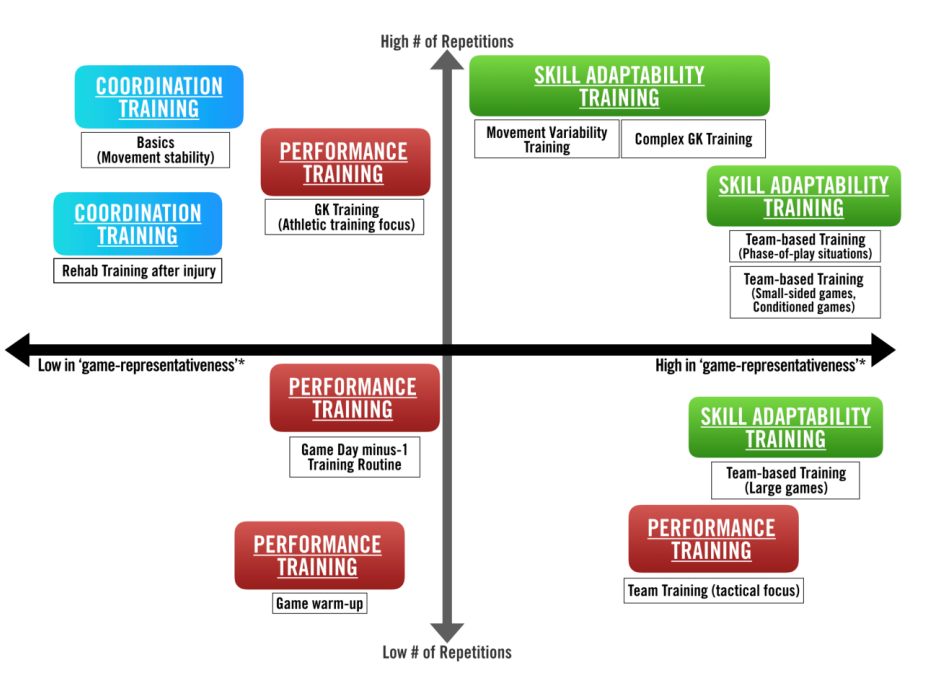
The infographic above shows where different types of training are based on the continuum of realism and repetition. Trying to find the correct balance of both elements.

